Speaker & Sound System
A high-quality speaker and sound system can completely transform the way people experience music, movies, presentations, celebrations, and live events. Whether you are organizing a wedding, hosting a corporate meeting, enjoying music at home, or arranging a large outdoor event, the right sound system helps deliver clear, powerful, and immersive audio.
Today, speaker technology has developed significantly. From compact Bluetooth speakers to professional PA systems, there are solutions for almost every environment and purpose. Choosing the right equipment depends on factors such as room size, audience, event type, sound quality, portability, and budget.
What Is a Speaker & Sound System ?
A speaker is an audio device that converts electrical signals into sound. A sound system is a combination of audio equipment designed to capture, process, amplify, and reproduce sound.
A basic sound system may include speakers, an amplifier, a microphone, cables, and a mixer. More advanced systems can include subwoofers, wireless microphones, audio processors, digital mixers, monitors, and multiple speaker units.
The main purpose of a sound system is to provide balanced and understandable audio throughout a specific space.
Types of Speakers
There are many types of speakers available today, and each type is designed for different situations.
Bluetooth Speakers
Bluetooth speakers are popular because they are portable and easy to use. They can connect wirelessly to smartphones, tablets, and laptops. They are ideal for small gatherings, outdoor activities, bedrooms, offices, and casual music listening.
Many modern Bluetooth speakers include rechargeable batteries, waterproof designs, and built-in microphones. Their compact size makes them easy to carry from one location to another.
Bookshelf Speaker & Sound System
Bookshelf speakers are designed primarily for home audio systems. They are relatively compact and can provide detailed and balanced sound when positioned correctly.
They are suitable for bedrooms, living rooms, offices, and small entertainment spaces. Bookshelf speakers are often paired with an amplifier or receiver to create a high-quality stereo setup.
Floor-Standing Speakers
Floor-standing speakers are larger than bookshelf models and are designed to deliver a fuller sound experience. They often include multiple drivers that handle different frequency ranges.
These speakers are popular among music enthusiasts and home theater users who want powerful audio without necessarily adding separate speakers for every frequency range.
Portable PA Speakers
Portable PA speakers are designed for public speaking, small events, parties, classrooms, and outdoor gatherings. Many models include microphone inputs, Bluetooth connectivity, rechargeable batteries, and built-in amplifiers.
Their portability makes them particularly useful for events where equipment needs to be transported frequently.
Professional PA Systems
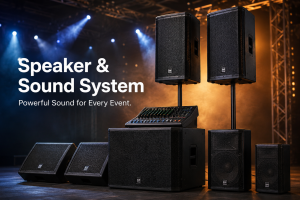
Professional public address systems are designed for concerts, weddings, large conferences, festivals, religious gatherings, and other major events.
A professional setup may include multiple speakers, subwoofers, amplifiers, mixers, microphones, monitor speakers, and other audio equipment. Proper setup is important to achieve even sound coverage and prevent unwanted noise or feedback.
Speaker & Sound System
Importance of Speaker & Sound System
Sound quality is one of the most important factors when choosing a speaker or sound system. Good speakers should reproduce vocals, music, and other audio clearly without excessive distortion.
Different speakers emphasize different parts of the audio spectrum. Bass provides depth and impact, while midrange frequencies are important for vocals and many musical instruments. High frequencies provide clarity and detail.
A good sound system should provide a balanced combination of bass, midrange, and treble according to the intended use.
The Role of a Subwoofer
A subwoofer is a specialized speaker designed to reproduce low-frequency sounds, commonly known as bass.
Subwoofers are especially useful for music events, home theaters, concerts, and parties where powerful low-frequency sound is desired. A properly matched subwoofer can make music and movies feel more immersive.
However, bigger bass is not always better. The subwoofer should be properly matched with the main speakers and the size of the room or event space.
Microphones and Sound Systems
Microphones are essential for many sound systems. They convert voices or other acoustic sounds into electrical signals that can be amplified.
There are several types of microphones, including wired microphones, wireless handheld microphones, lapel microphones, and headset microphones.
Wireless microphones are particularly useful for presentations, weddings, performances, and stage events because they allow speakers or performers to move freely.
Audio Mixers
An audio mixer is an important component of many professional sound systems. It allows users to control multiple audio sources from one place.
For example, a mixer can receive signals from microphones, musical instruments, computers, and other audio devices. The operator can adjust volume, equalization, effects, and other settings for each channel.
Modern digital mixers offer advanced control and can often be operated using computers, tablets, or smartphones.
Sound Systems for Events
Different events require different types of sound systems.
For a small birthday party, a portable Bluetooth or PA speaker may be enough. A wedding may require multiple speakers, wireless microphones, a mixer, and subwoofers. A corporate presentation may prioritize clear speech and reliable microphones over extremely powerful bass.
Large concerts and outdoor events require much more powerful professional systems designed to cover large audiences.
Choosing equipment based on the size and purpose of the event can improve sound quality while preventing unnecessary expenses.
Home Sound Systems
A quality sound system can also enhance entertainment at home. Home audio systems are commonly used for music, movies, television, and gaming.
A basic home setup may include a pair of stereo speakers and an amplifier. A home theater system can include multiple speakers and a subwoofer to create surround sound.
Wireless and smart speakers are also becoming popular because they can connect easily to smartphones, streaming services, and smart home systems.
Wired vs. Wireless Sound Systems
Both wired and wireless systems have advantages.
Wired systems are generally reliable and can provide stable connections. They are commonly used in professional installations and large events.
Wireless systems provide greater flexibility and reduce the need for long cables. They are convenient for portable speakers, wireless microphones, and modern home audio setups.
The best option depends on the environment, required mobility, reliability, and budget.
How to Choose the Right Speaker and Sound System
Before purchasing a sound system, consider where and how you will use it.
First, determine the size of the room or event area. A small speaker may work well in a bedroom but may not provide sufficient coverage for a large outdoor event.
Next, consider the type of audio you need. If you mainly listen to music, focus on balanced sound quality. For presentations, vocal clarity is especially important. For parties and concerts, powerful bass and high output may be more important.
You should also check connectivity options such as Bluetooth, USB, AUX, HDMI, Wi-Fi, and microphone inputs depending on your requirements.
Battery life is another important factor for portable speakers. For professional systems, durability, power handling, compatibility, and ease of setup should also be considered.
Speaker Placement Matters
Even an excellent speaker can sound poor if it is positioned incorrectly. Speaker placement affects volume, clarity, bass response, and overall sound coverage.
For home audio, speakers should generally be positioned carefully in relation to the listener. For events, speakers should be placed to provide consistent coverage across the audience.
Professional sound engineers use techniques such as speaker height, distance, angle, and acoustic adjustment to achieve better results.
Maintaining Your Sound System
Proper maintenance can extend the life of your speakers and other audio equipment. Keep speakers away from excessive moisture, dust, and extreme temperatures.
Check cables and connectors regularly for damage. Avoid operating equipment beyond its recommended limits because excessive volume can cause distortion or damage components.
Portable speakers should also be charged and stored according to the manufacturer’s instructions.
The Future of Speaker Technology
Speaker technology continues to evolve. Wireless connectivity, artificial intelligence, smart assistants, improved battery technology, and advanced audio processing are making sound systems more convenient and capable.
Modern speakers are increasingly becoming part of connected home environments. Users can control multiple devices, stream music wirelessly, and create customized audio experiences.
Professional sound systems are also becoming more advanced, with digital signal processing and software-based controls providing greater precision.
Conclusion
A good speaker and sound system can make music, movies, presentations, and events much more enjoyable. From compact Bluetooth speakers to powerful professional PA systems, there are solutions for every need and environment.
The key is to choose equipment based on the intended use, space, sound requirements, connectivity, and budget. With the right speakers, proper placement, and suitable audio equipment, you can create a powerful and enjoyable listening experience for almost any occasion.
Whether you need a simple speaker for everyday music or a complete professional sound system for a large event, investing in the right equipment can make a significant difference in sound quality and overall experience.