Smart Home Appliances for Modern Living
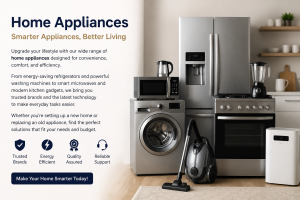
Smart Home Appliances for Modern Living are transforming the way people live, work, and manage their homes. With the rapid growth of technology, everyday household devices are becoming smarter, more convenient, energy-efficient, and easier to control. From smart refrigerators and washing machines to robot vacuum cleaners and intelligent lighting systems, modern appliances can help save time while, creating a more comfortable and connected lifestyle.
What Are Smart Home Appliances?
Smart home appliances are electronic devices that can connect to the internet, smartphones, or other smart devices. Unlike traditional appliances, they can often be controlled remotely and may provide useful information about their operation. Many smart appliances use Wi-Fi, Bluetooth, sensors, artificial intelligence, or mobile applications to make everyday household tasks easier.
Smart Refrigerators for a Connected Kitchen
The refrigerator is one of the most important appliances in any home, and smart refrigerators are taking kitchen convenience to a new level. Modern smart refrigerators can include features such as digital temperature control, food-storage monitoring, door-open alerts, and energy-saving modes.
Some advanced models can connect to smartphone applications, allowing users to adjust settings or receive notifications while they are away from home. Certain smart refrigerators also feature internal cameras that can help users check their food supplies without opening the door.
For busy families, these features can make grocery planning and food management much easier.
Smart Washing Machines
Laundry is a regular household task, but smart washing machines can make it much simpler. These appliances often allow users to control washing cycles through smartphone applications.
A smart washing machine can notify you when a cycle has finished, provide maintenance alerts, and recommend suitable washing programs. Some models can automatically detect the type and weight of clothing and adjust water levels and washing settings accordingly.
These intelligent features can save time, reduce water consumption, and improve cleaning performance.
Robot Vacuum Cleaners
Keeping floors clean can take a significant amount of time, especially in busy households. Robot vacuum cleaners provide a convenient solution by automatically cleaning floors with minimal human effort.
Many modern robot vacuums use sensors and mapping technology to understand the layout of a home. They can navigate around furniture, avoid obstacles, and return to their charging station when their battery is low.
Advanced models can also be controlled through smartphone apps, allowing homeowners to schedule cleaning sessions even when they are not at home. Some models combine vacuuming and mopping functions, making them even more useful for modern households.
Smart Air Conditioners
Smart Home Appliances for Modern Living air conditioners provide better control over indoor temperature and energy usage. Instead of manually adjusting the air conditioner, users can control many smart models through mobile applications or voice commands.
For example, you can turn on your air conditioner before arriving home so that the room is comfortable when you arrive. Some smart air conditioners can also learn usage patterns and automatically adjust temperature settings.
Energy-saving features can help reduce unnecessary electricity consumption, making smart air conditioning an attractive option for homeowners who want both comfort and efficiency.
Smart Lighting Systems
Smart lighting is another popular part of modern homes. Smart bulbs and lighting systems can be controlled using smartphones, voice assistants, or automated schedules. Smart lighting can also be programmed to turn on automatically at specific times.
For example, lights can gradually brighten in the morning or automatically turn off at bedtime. These features provide convenience while potentially helping reduce energy waste.
Smart Ovens and Kitchen Appliances
Cooking is becoming more convenient with smart kitchen appliances. Smart ovens can provide precise temperature control, cooking timers, and remote monitoring through mobile applications.
Some advanced ovens can recommend cooking settings based on the type of food being prepared. Smart coffee makers, air fryers, microwaves, and other connected kitchen appliances can also help simplify daily cooking routines.
For people with busy schedules, the ability to monitor and control kitchen appliances remotely can make meal preparation more convenient.
Smart Security Devices
Home technology is not limited to convenience. Smart security devices can also help improve household safety. Smart cameras, video doorbells, smart locks, and motion sensors can provide homeowners with greater awareness of what is happening around their property.
A smart doorbell, for example, can send an alert to a smartphone when someone approaches the door. Smart cameras may allow homeowners to view live video remotely.
Smart locks can also provide keyless entry and temporary access codes,
which can be useful for families, guests, or service providers.
Benefits of Smart Home Appliance
s
One of the biggest advantages of smart home appliances is convenience. Many devices can be monitored or controlled remotely.
Another important benefit is energy efficiency. Smart appliances can use sensors and automated settings to reduce unnecessary electricity or water consumption. Over time, this may help households manage their utility costs more effectively.
Smart appliances can also save time. Robot vacuums can clean floors automatically, smart washing machines can provide notifications, and smart kitchen appliances can simplify cooking tasks.
In addition, many smart devices can work together as part of a connected smart home ecosystem.
How to Choose the Right Smart Appliances
When purchasing Smart Home Appliances for Modern Living, it is important to consider your actual needs rather than choosing a device simply because it has many features.
First, check whether the appliance is compatible with your smartphone and existing smart home system. You should also consider energy efficiency, reliability, warranty, ease of use, and long-term maintenance costs.
Security and privacy are also important. Since many smart appliances connect to the internet, users should choose reputable products, keep software updated, and use strong passwords.
Finally, compare prices and customer reviews before making a purchase. A more expensive appliance is not always the best choice if its additional features are no
t useful for your lifestyle.
The Future of Smart Home Living
The future of smart homes is likely to become even more connected. Artificial intelligence and automation are expected to make household devices increasingly capable of understanding user preferences and routines.
In the future, appliances may communicate with one another more effectively and automatically coordinate household tasks. For example, a smart home system could adjust lighting, temperature, and appliances based on the time of day and the homeowner’s activities.
As technology continues to develop, smart appliances will become an increasingly important part of modern living.
Conclusion
Smart home appliances offer a combination of convenience, efficiency, comfort, and modern technology. From smart refrigerators and washing machines to robot vacuums, intelligent lighting, and connected security systems, these devices can make everyday life easier.
For homeowners looking to modernize their living spaces, smart appliances can be a valuable investment. By choosing reliable, energy-efficient, and compatible products, you can create a smarter home that saves time, improves comfort, and supports a more convenient lifestyle.
[…] has created a huge demand for specialized computer accessories. Gaming keyboards, precision mice, headsets, mouse pads, controllers, and RGB lighting can create a […]