Smart Phone – Powerful Technology for Modern Life
Smartphones have become an essential part of modern life. What was once primarily used for making calls and sending messages has now developed into a powerful digital device capable of handling communication, entertainment, photography, education, shopping, banking, business, and much more. With advanced processors, high-quality cameras, large displays, fast internet connectivity, and intelligent software, smartphones help people stay connected and productive wherever they are.
Whether you are a student, professional, business owner, content creator, traveler, or technology enthusiast, choosing the right smartphone can make everyday tasks easier and more convenient.
What Is a Smartphone?
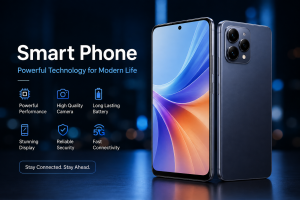
Smart Phone – Powerful Technology for Modern Life
A smartphone is a mobile electronic device that combines traditional phone functions with the capabilities of a small computer. Users can make calls, send messages, browse the internet, install applications, take photographs, record videos, watch movies, play games, manage documents, and access online services.
Modern smartphones generally use operating systems such as Android or iOS. These operating systems provide access to millions of applications covering almost every area of daily life.
Because smartphones are portable and connected to the internet, users can access information and services from almost anywhere.
Powerful Smartphone Performance
One of the most important features of a smartphone is its processor. The processor determines how efficiently the device can perform tasks and run applications.
Modern smartphones use advanced mobile processors that can handle demanding applications, multitasking, gaming, photography, video editing, and artificial intelligence features.
RAM also plays an important role in performance. A smartphone with sufficient RAM can keep multiple applications running smoothly and reduce the need to reload apps frequently.
When purchasing a smartphone, users should consider the combination of processor, RAM, storage, and software optimization rather than focusing on a single specification.
High-Quality Smartphone Displays
The display is one of the features users interact with most frequently. Modern smartphones offer bright, sharp, and colorful screens designed for browsing, watching videos, gaming, reading, and viewing photographs.
Many smartphones now feature OLED or AMOLED displays that provide strong contrast, vibrant colors, and deep blacks. Some models also offer high refresh rates, which can make scrolling and animations feel smoother.
Display size is another important consideration. Larger screens can be useful for watching videos and working with documents, while smaller devices may be easier to hold and carry.
Smartphone Cameras
Smartphone cameras have improved dramatically over the years. Many modern phones can capture detailed photographs and high-resolution videos that are suitable for social media, personal memories, and even professional content creation.
Modern smartphones may include multiple cameras, such as wide-angle, ultra-wide, macro, and telephoto cameras. Software processing also plays a major role in improving image quality.
Features such as portrait mode, night photography, optical image stabilization, autofocus, and advanced video recording can help users capture better results in different environments.
For content creators, a smartphone with a capable camera can be an affordable way to create photographs, videos, reels, and other digital content.
Battery Life and Fast Charging
Battery life is an important factor when choosing a smartphone. A powerful phone is less useful if its battery cannot last through the day.
Modern smartphones often include large-capacity batteries designed to support extended use. Battery performance depends on several factors, including screen brightness, mobile network usage, gaming, video streaming, and background applications.
Fast charging technology has also become increasingly common. It can allow users to recharge their devices more quickly when they are short on time.
Wireless charging is another convenient feature available on some smartphones, although it may not be included on every model.
Storage Capacity
Smartphone storage determines how many applications, photographs, videos, documents, and other files can be stored on the device.
Users who take many photographs, record high-resolution videos, or download large games may benefit from higher storage capacity.
Cloud storage services can provide additional space and help users back up important files. Before purchasing a smartphone, it is a good idea to consider how much storage you typically use and whether the device supports expandable storage.
Internet and Connectivity
Smartphones provide several connectivity options that allow users to communicate and access online services.
Wi-Fi is useful for connecting to home, office, school, or public networks. Mobile data allows users to access the internet while away from Wi-Fi.
Many modern smartphones also support advanced mobile network technologies, Bluetooth, GPS, NFC, and other wireless features.
Bluetooth allows users to connect wireless headphones, speakers, keyboards, smartwatches, and other compatible devices. GPS enables navigation and location-based services.
Smartphones for Work and Business
Smartphones have become valuable tools for professionals and business owners. Email, messaging applications, video conferencing, cloud storage, calendars, document editors, banking applications, and business management tools can all be accessed from a smartphone.
Professionals can respond to messages, review documents, attend online meetings, manage schedules, and communicate with customers while away from their computers.
For small businesses, smartphones can also be useful for social media marketing, product photography, customer communication, online payments, and managing online stores.
Smartphones for Education
Students can use smartphones as portable learning tools. Educational applications, online courses, digital libraries, video tutorials, language-learning platforms, and productivity tools can provide access to educational resources from almost anywhere.
Students can also use smartphones to scan documents, take notes, join virtual classes, research topics, and communicate with teachers or classmates.
However, responsible use is important. Students should manage screen time and avoid unnecessary distractions while studying.
Entertainment and Gaming
Smartphones are also popular entertainment devices. Users can stream movies and music, watch videos, read digital content, play games, and use social media platforms.
Gaming performance has improved significantly with powerful processors, high refresh-rate displays, advanced graphics capabilities, and improved cooling systems.
For casual users, an affordable smartphone may provide more than enough performance. Serious mobile gamers may prefer devices with higher-end processors, larger batteries, advanced displays, and specialized gaming features.
Smartphone Security
Security is an important consideration because smartphones often contain personal information, photographs, messages, financial details, and other sensitive data.
Modern smartphones provide security features such as fingerprint recognition, facial recognition, screen locks, application permissions, and encrypted storage.
Users should keep their operating systems and applications updated. Strong passwords and secure authentication methods can also help protect personal information.
It is also important to download applications from trusted sources and avoid suspicious links or unknown files.
How to Choose the Right Smartphone
There is no single smartphone that is perfect for everyone. The best choice depends on individual needs and budget.
Before purchasing a phone, consider the following factors:
Performance: Choose a processor and RAM combination suitable for your daily tasks.
Camera: If photography or video creation is important, look for a phone with a capable camera system.
Battery: Consider battery capacity and charging speed if you frequently use your phone throughout the day.
Display: Choose a screen size and technology that suits your preferences.
Storage: Select enough storage for your applications, photographs, videos, and documents.
Software: Consider the operating system, software features, update support, and overall user experience.
Build Quality: A durable design can help the device withstand everyday use.
Budget: Compare specifications and features rather than choosing solely based on price or brand name.
The Future of Smartphones
Smartphone technology continues to evolve rapidly. Artificial intelligence is becoming increasingly integrated into mobile devices, helping with photography, translation, productivity, search, communication, and other tasks.
Future smartphones may offer even more advanced AI capabilities, improved battery technology, faster connectivity, better cameras, flexible displays, and enhanced security.
As smartphones become more intelligent, they are likely to play an even larger role in everyday life.
Conclusion
Smartphones have changed the way people communicate, work, learn, shop, entertain themselves, and access information. With powerful processors, advanced cameras, high-quality displays, long-lasting batteries, and extensive connectivity options, modern smartphones are more than communication devices—they are powerful tools for everyday life.
When choosing a smartphone, focus on your personal needs, preferred features, usage habits, and budget. The right device can provide an excellent combination of performance, convenience, entertainment, and productivity.
As technology continues to advance, smartphones will remain an important part of modern digital life, helping users stay connected and make the most of the opportunities offered by the digital world.